
What hard water actually is
Hard water contains dissolved calcium and magnesium picked up as water moves through mineral-bearing material. “Hard” describes mineral concentration, not whether water is dangerous. In a home, those minerals can form pale deposits when water evaporates, react with soap and accumulate on heated surfaces. The practical question is how much hardness reaches this property today—not whether a broad online map labels the region hard.
How hardness is measured
Laboratories commonly report hardness as milligrams per liter (mg/L) as calcium carbonate. Parts per million is numerically equivalent in dilute water. Water-treatment professionals also use grains per gallon (gpg). One gpg is about 17.1 mg/L. Converting units helps compare a report with equipment settings, but the sample location, date and water source still matter. Read the North Port hardness guide before using any published estimate.
What hard water looks like at home
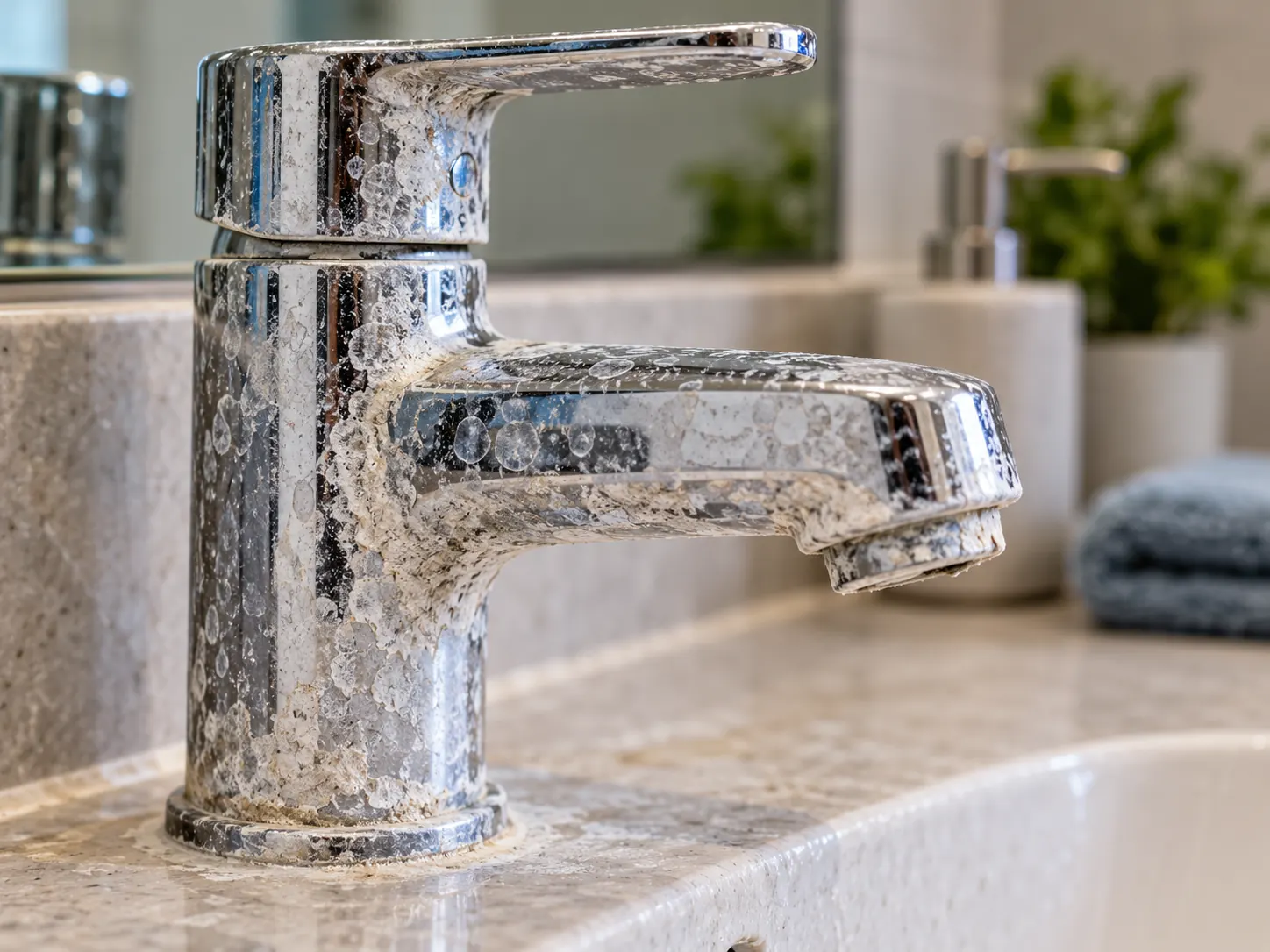
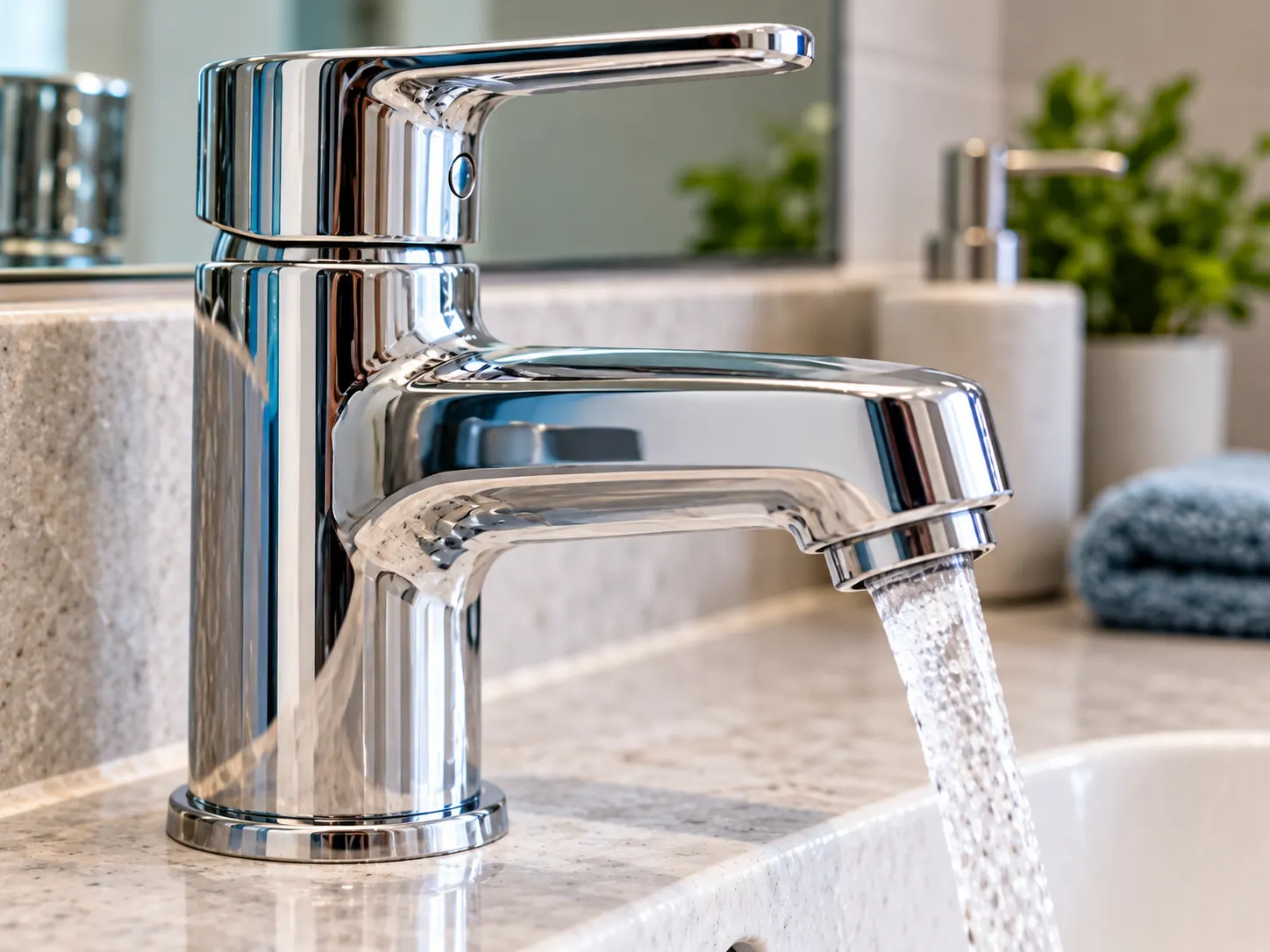
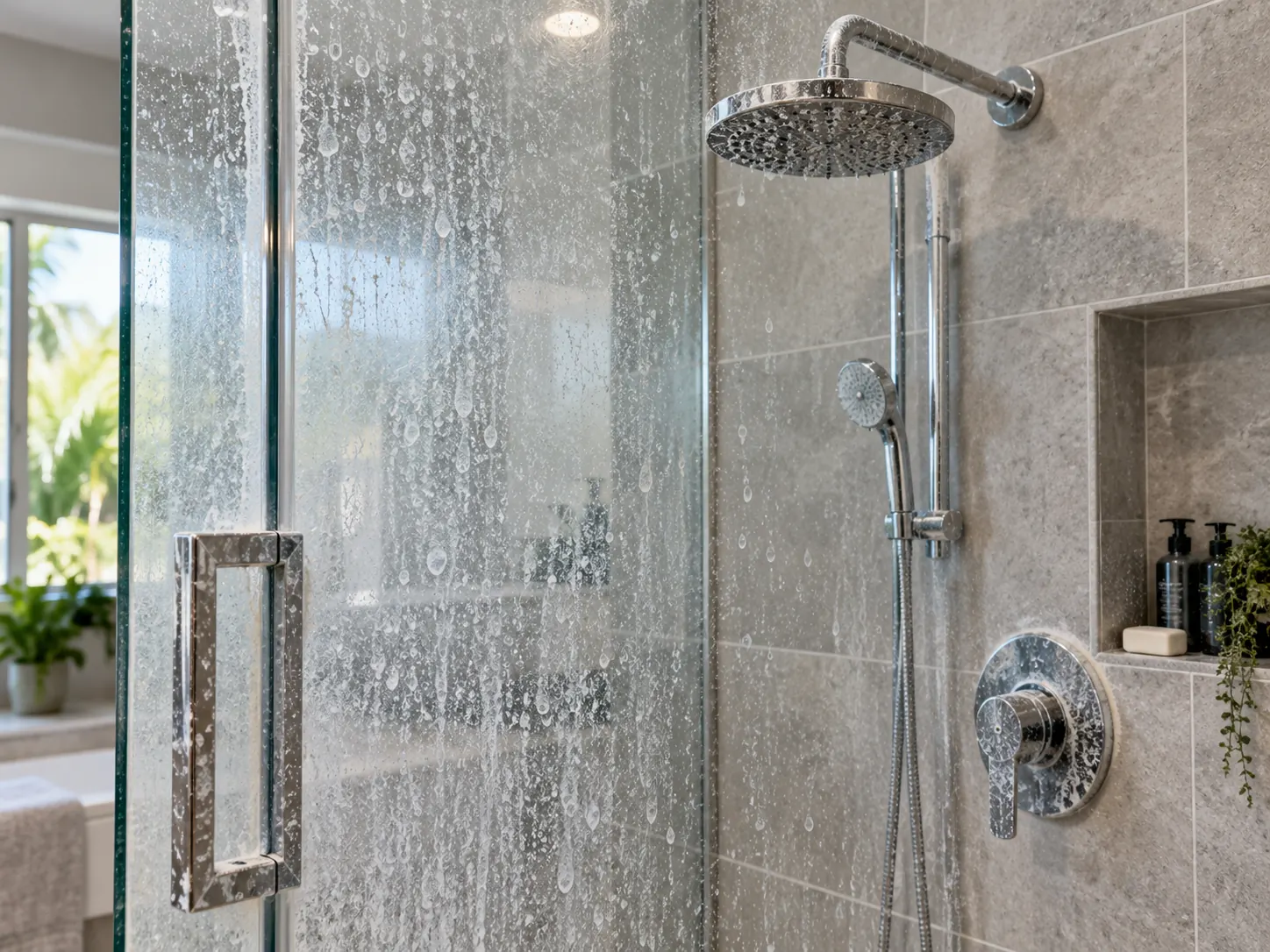
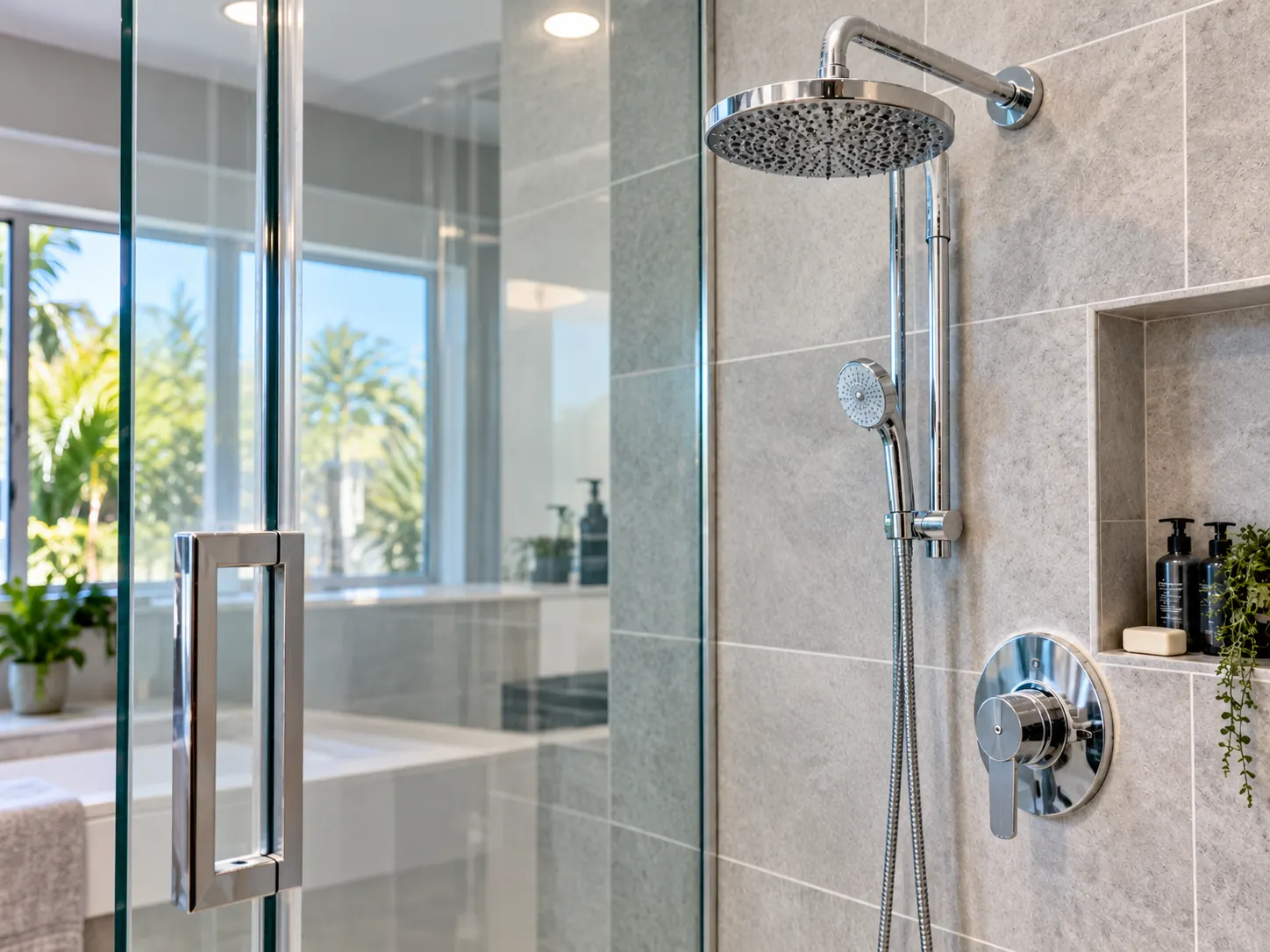
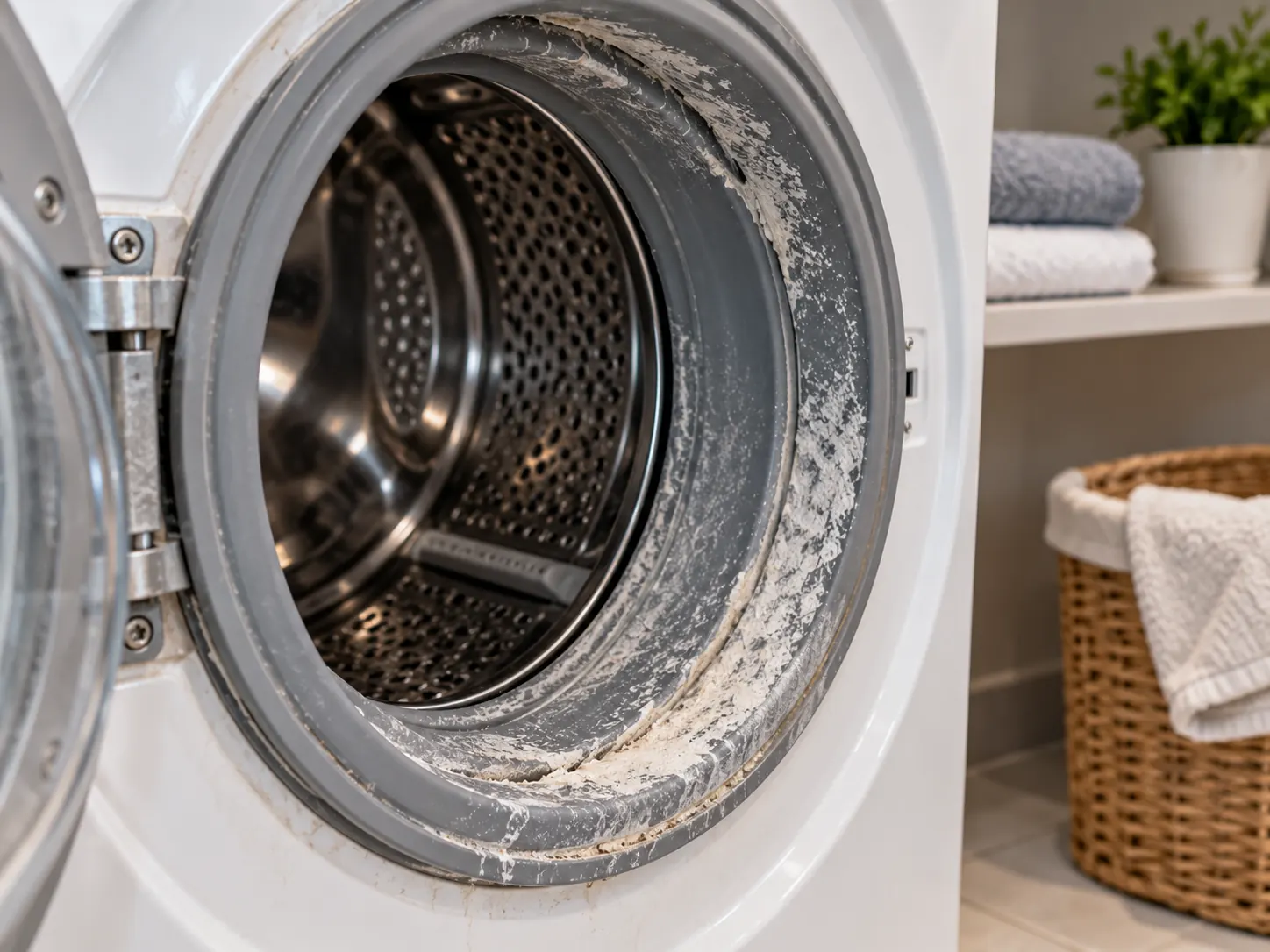
White scale on a faucet aerator, spotting on shower glass, cloudy glassware and soap that feels reluctant to lather can all be consistent with hardness. Heating concentrates scale, so water heaters, kettles and dishwasher components may show effects early. These clues justify a hardness test; they do not reveal an exact number and do not diagnose iron, sediment, odor or microbiological safety.
How ion exchange works
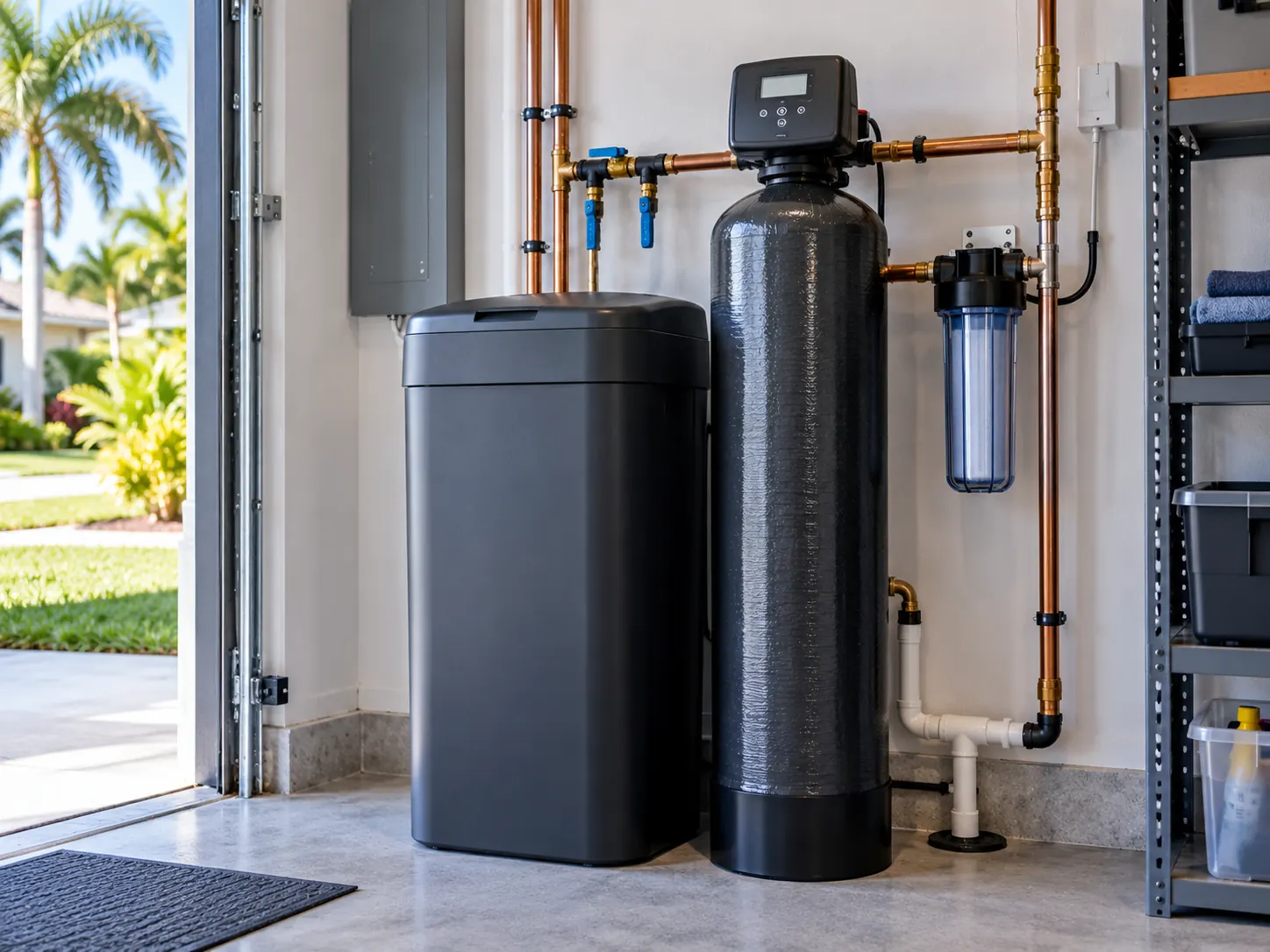
The mineral tank contains resin beads. As water passes through, the resin exchanges sodium or potassium ions for calcium and magnesium ions. When the resin nears capacity, the control valve starts regeneration: brine from a separate tank recharges the resin and rinse water goes to drain. Modern demand-initiated controls regenerate from measured use rather than a fixed calendar, which can reduce avoidable salt and water use.
Capacity, salt and regeneration
Capacity is the quantity of hardness a softener can remove between regenerations. Usable capacity depends on the salt dose and programmed settings, not merely the largest number on a sales sheet. Salt use therefore varies with hardness, water consumption, efficiency and regeneration frequency. Ask for grains removed per pound of salt, estimated gallons per regeneration and the assumptions behind both. EPA notes that regeneration uses water and encourages efficient selection and maintenance.
Sizing for household demand
Sizing combines tested hardness, estimated daily gallons, any appropriately accounted-for iron, desired reserve and peak flow. Peak flow matters when several showers or appliances run together: a unit can have enough capacity over a week yet still restrict busy-time flow. Household size is an input, not a complete sizing method. Use the sizing guide to understand capacity and service-flow questions.
City water and private wells
For a City-water home, use the current utility report for system context and a property hardness test for settings and sizing. For a private well, broader testing may be needed because hardness may sit alongside iron, manganese, sediment, pH or odor concerns. Treatment order can matter; the private-well treatment guide explains why a softener should not be selected in isolation.
Softener, conditioner or filter?
A conventional ion-exchange softener measurably removes hardness ions. A salt-free conditioner generally aims to change scale-forming behavior without producing soft water. A filter targets specified particles, tastes, odors or contaminants according to its media and documented claims. None is a universal substitute for the others. Compare them in softener versus filter and ask exactly what the proposed product reduces.
What a softener does not do
A softener does not make every water source safe, remove all dissolved substances, disinfect a well or guarantee better taste. It may have limited documented capability for certain forms and concentrations of iron, but that is product- and water-specific. Health-related concerns need appropriate testing and a treatment device certified for the relevant reduction claim.
Installation, maintenance and life
Installation needs a suitable main-line location, bypass, drain, electrical supply where required, weather protection and service access. Maintenance includes checking salt, preventing bridging, cleaning the brine tank when appropriate and watching for continuous drain flow or returning scale. Resin life and valve life depend on water chemistry, chlorine exposure, usage, maintenance and repair availability—not a universal anniversary date.
What affects cost
Equipment capacity, control valve, certified performance, installation access, pipe changes, drainage, permits where applicable, pre-treatment and optional filtration or RO all affect cost. A private well with several confirmed problems can need a staged system. See the cost guide and insist on a quote tied to testing and installation conditions.
Common questions
How much salt does a softener use?
It varies with hardness, water use, usable capacity, salt dose and efficiency. Ask for an estimate based on your test and household—not a generic bag count.
How often should it regenerate?
A demand-initiated unit regenerates when calculated capacity is used. The interval changes with water consumption and settings.
Can a softener reduce water pressure?
Every treatment device creates some pressure loss. Correct service-flow sizing and clean plumbing reduce noticeable impact.
What size softener do I need?
Use measured hardness, daily demand, peak flow, reserve and any relevant iron adjustment. Nominal grain labels alone are insufficient.
Sources matched to this guide
EPA WaterSense softener guidance; NSF residential treatment standards guide
Sources support the specific factual statements above. Equipment claims still depend on the exact certified model and local conditions.