

What reverse osmosis is
RO is a point-of-use process that uses feed pressure to push water across a semipermeable membrane. Some water becomes treated product water; the remainder carries rejected dissolved material to drain.
The treatment train
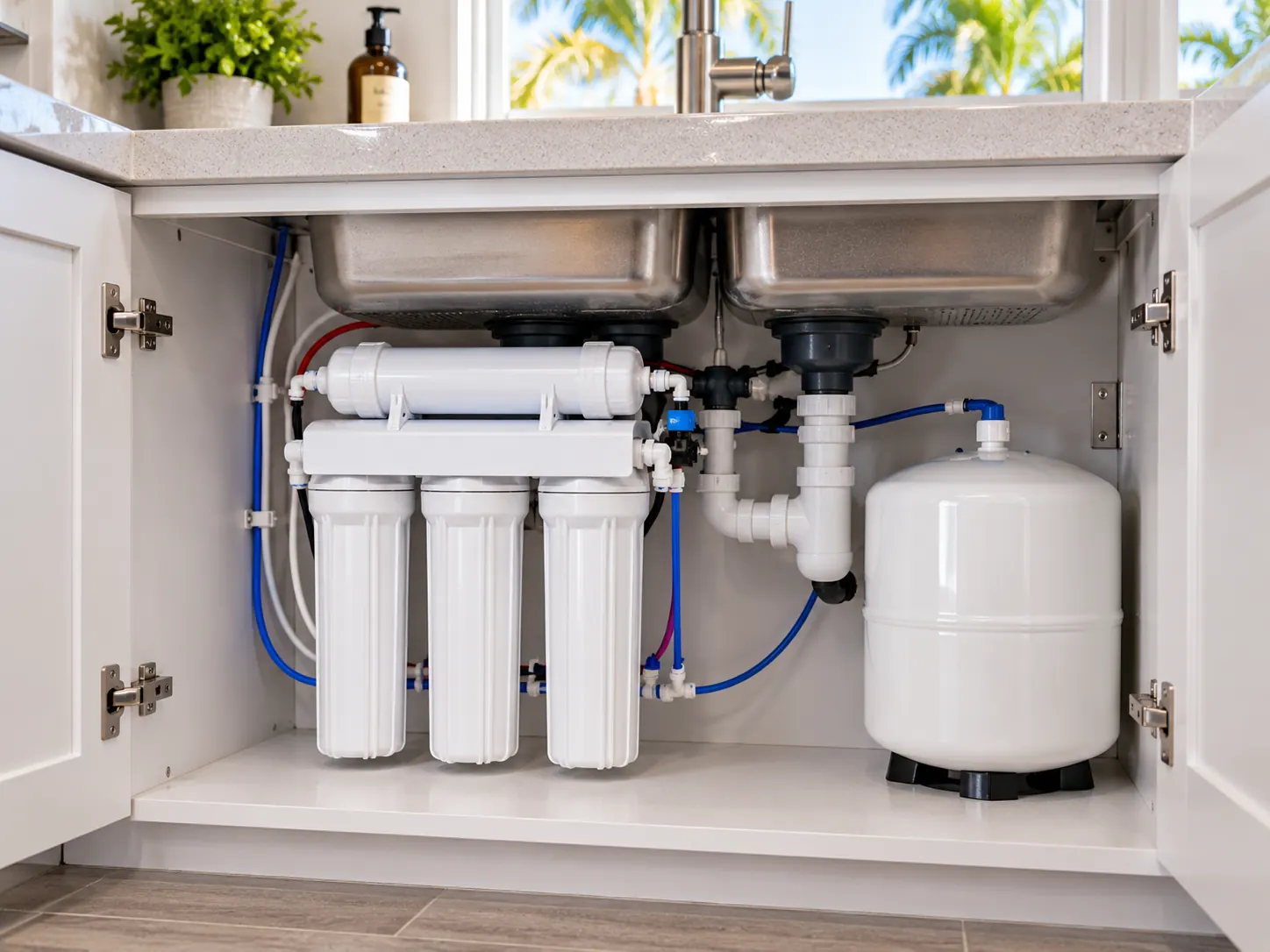
A sediment prefilter protects later stages. Carbon pretreatment can protect the membrane from specified disinfectants and improve aesthetics. The membrane performs the main separation. A postfilter polishes water before the dedicated faucet. Each stage has its own service limit.
Storage tank and faucet
Many residential RO units produce water gradually and store it in a small pressurized tank. The dedicated faucet draws from that reserve. Tank pressure, usable volume and daily production determine whether recovery feels adequate.
Feed pressure and reject water
Membrane output and rejection depend on feed pressure, temperature and incoming chemistry. Low pressure can slow production and worsen efficiency. All conventional RO creates reject water; compare certified efficiency or recovery information under realistic conditions.
TDS and minerals
A TDS meter estimates conductivity-related dissolved solids; it does not identify individual contaminants or prove safety. RO usually reduces many dissolved minerals. Remineralization cartridges are optional aesthetic components and should not be confused with contaminant treatment.
RO versus other filters
A refrigerator filter is usually carbon-based and built for a specific appliance and claim. Whole-home filtration treats far more flow. A softener targets hardness. RO targets drinking-water treatment at one point. One may protect or complement another, but they are not interchangeable.
Certification and claims
NSF/ANSI 58 applies to reverse-osmosis drinking-water systems. Certification still attaches to particular reduction claims and configurations. Verify the model, replacement cartridges and claimed substances.
Installation and upkeep
Typical under-sink installation needs cold-water feed, drain connection, tank space and a dedicated faucet opening. Replace pre/postfilters and membrane according to measured performance and manufacturer instructions; sanitize components as directed and repair leaks promptly.
Common questions
Does RO waste water?
It produces a reject stream. The ratio varies widely with design, pressure, temperature and membrane condition.
Does RO remove minerals?
It reduces many dissolved ions, but exact performance depends on the membrane and certified claims.
Does every system need a tank?
No. Tankless designs exist, but require suitable power, pressure and production capacity.
How often are filters changed?
Use the manufacturer schedule together with water quality, usage and performance—not one universal interval.
Sources matched to this guide
NSF residential treatment standards guide
Sources support the specific factual statements above. Equipment claims still depend on the exact certified model and local conditions.