

Symptoms are clues, not diagnoses
A private well can change with rainfall, pumping, nearby activity, plumbing and equipment condition. Color, smell and scale can suggest useful tests, but treatment must follow representative results.
Orange staining
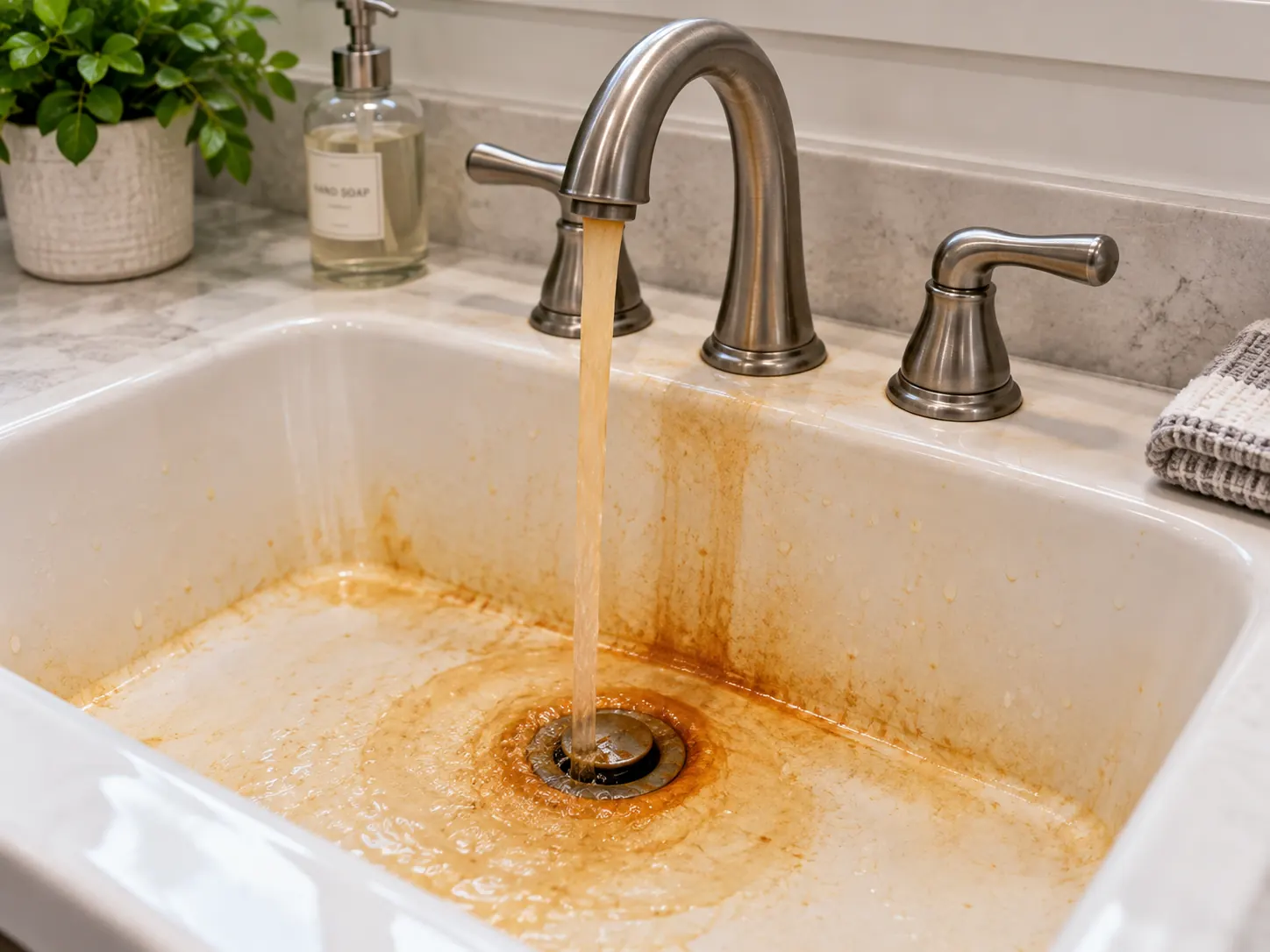
Orange or rust-colored marks can sometimes be associated with iron. The form of iron, concentration, pH, oxygen and flow affect treatment. A softener may handle limited clear-water iron only within documented limits; oxidation and filtration may be needed in other cases.
Black or brown staining
Dark stains can sometimes be associated with manganese or with combined mineral and sediment conditions. Confirm the substance and concentration. Media choice, oxidant demand and backwash capability matter.
Rotten-egg odor
Hydrogen sulfide can cause a sulfur-like odor, but the source may be the well, plumbing, water heater or bacterial activity. Compare hot and cold fixtures and test appropriately. Do not assume one carbon filter or one disinfectant dose is the answer.
Sediment or cloudiness
Particles may come from the well, formation, casing, pump work or plumbing. A sample that clears from the bottom differs from trapped air that clears upward. Identify particle load and protect pumps and treatment equipment before choosing filtration.
White scale
White mineral deposits and poor lather can indicate hardness. Measure hardness before sizing softening equipment. Hardness treatment does not replace safety testing.
Low or unusual pH
Low pH may contribute to corrosive conditions; higher pH can influence scaling and treatment chemistry. Accurate field or laboratory results, alkalinity and plumbing materials help determine whether neutralization is appropriate.
A testing plan
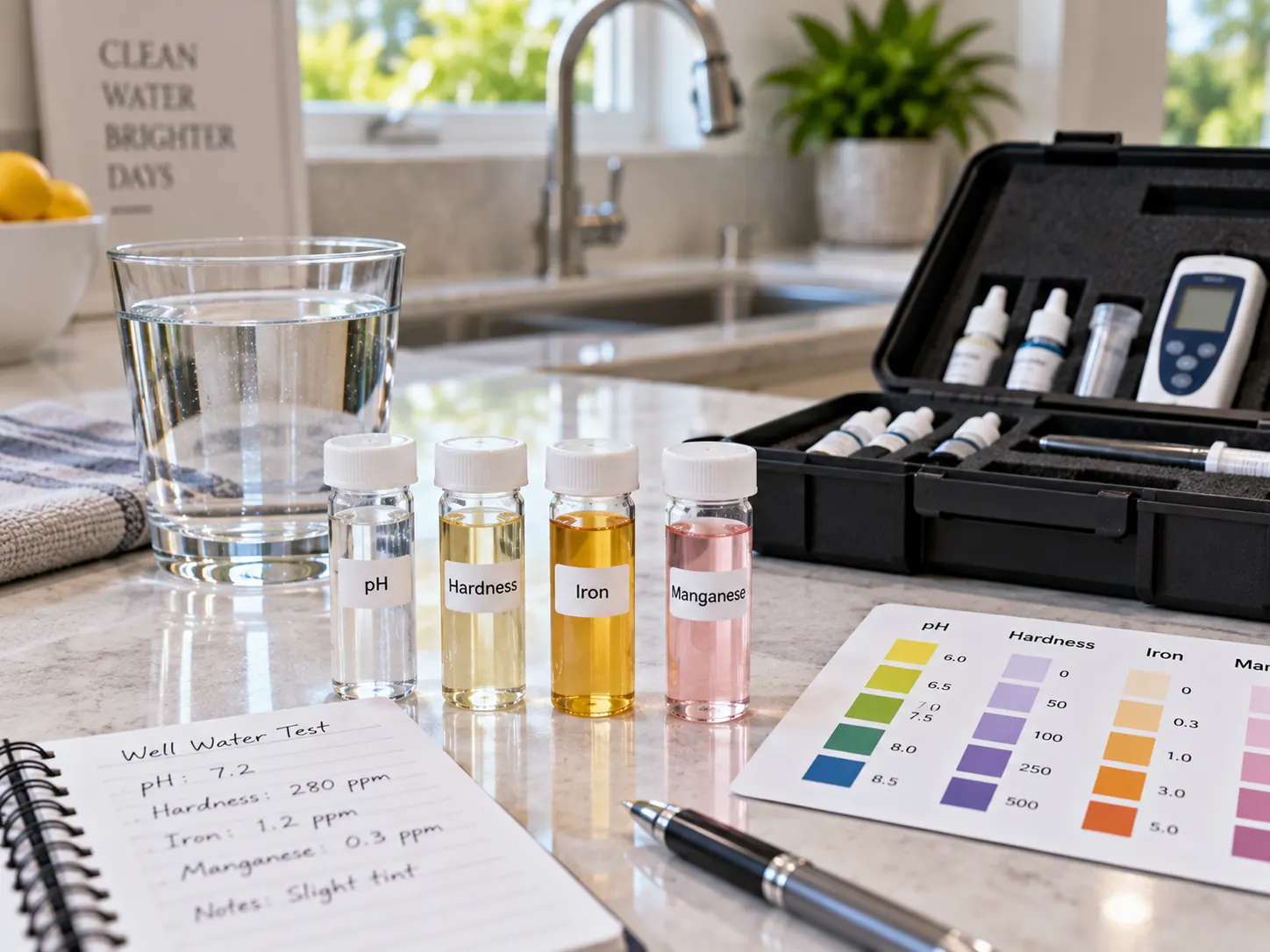
EPA advises annual private-well testing for total coliform bacteria, nitrates, total dissolved solids and pH, with additional tests when local conditions or symptoms warrant. Use a certified laboratory and follow its sampling instructions. Test after flooding, repairs or sudden changes as advised.
Treatment order
A staged system may include particle removal, oxidation, backwashing filtration, neutralization, softening, disinfection or point-of-use drinking-water treatment. The order protects downstream equipment and allows adequate contact time. It must fit actual chemistry and microbial results.
Flow, pressure and maintenance
Well yield, pump curve, pressure-tank settings and peak household demand constrain treatment. Backwashing tanks need sufficient flow. Filters, injectors, lamps, chemical tanks and softeners each need maintenance; build that burden into the choice.
Common questions
What causes orange staining?
Iron is one possibility, but testing should confirm the cause and form before treatment.
Why does my well smell like sulfur?
Hydrogen sulfide is possible, but the well, heater and plumbing can create different odor patterns.
Should I test every year?
EPA recommends annual testing for several baseline parameters and additional testing when conditions change.
Can a softener remove iron?
Some models can address limited forms and concentrations under stated conditions; it is not a universal iron system.
Sources matched to this guide
EPA private-well guidance; NSF residential treatment standards guide
Sources support the specific factual statements above. Equipment claims still depend on the exact certified model and local conditions.