1. Utility water-quality report
A Consumer Confidence Report explains a public system’s sources, regulated monitoring and results for a reporting period. It is authoritative for system context, but it does not measure a home’s internal plumbing, current tap hardness or a private well.
2. Home test strip
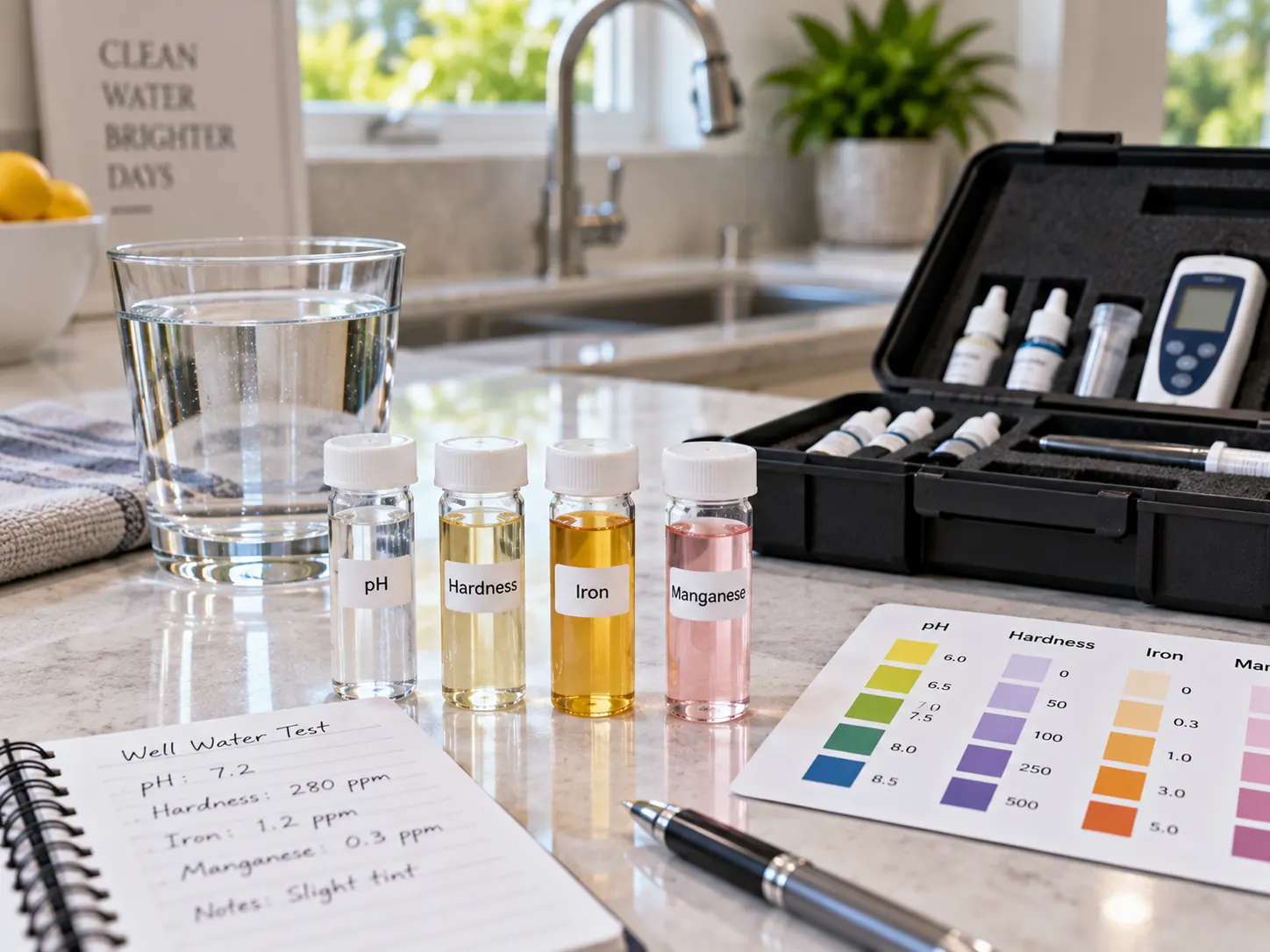
A strip is fast and inexpensive for screening a limited parameter. Color matching, storage, expiry and range limit precision. It can indicate whether more testing is worthwhile, but should not be treated as a complete safety assessment.
3. Onsite treatment test
A treatment professional may use titration, meters or field kits to measure hardness, pH, iron or other selection inputs. Good field testing is useful for equipment design. Ask what method, range and calibration apply. Sales testing is not automatically a certified laboratory analysis.
4. Certified laboratory test
A certified laboratory uses controlled methods, sample handling and reporting. It is the appropriate route for health-related contaminants and a stronger basis for complex well treatment. Follow bottle, preservation and holding-time instructions exactly.
Testing City water
Begin with the current North Port CCR for system-level facts. Add property tests when the question concerns hardness, a building-specific taste or odor, old plumbing, or equipment selection. Choose parameters from the concern rather than ordering an unfocused panel.
Testing a private well
EPA recommends annual baseline testing for total coliform bacteria, nitrates, total dissolved solids and pH, plus other tests when conditions warrant. Test after floods, repairs or a sudden change as advised. Contact the local health department or a certified laboratory for scope.
Sampling changes the answer
Remove or retain aerators only as instructed, disinfect the outlet when required, flush for the specified time and avoid sampling through treatment unless evaluating that treatment. A mislabeled or mishandled sample can create confident-looking but unusable data.
Turning results into decisions
Separate health-based exceedances from aesthetic findings. Confirm unexpected results where advised. Then match equipment to the specific substance, concentration, flow and certified reduction claim. Well-water treatment may require a staged process.
Common questions
Is a free home test enough?
It can be useful for equipment screening, but it is not a substitute for certified analysis when safety is at issue.
Can the CCR tell me my hardness today?
It may provide context, but a current property measurement is better for sizing.
Where can I find a certified lab?
EPA and Florida programs provide laboratory-certification contacts; your local health department can also guide well owners.
Should I sample before or after equipment?
Sample before to characterize source water and after to verify performance, following the testing purpose and laboratory instructions.
Sources matched to this guide
North Port Utilities annual water-quality reporting; EPA private-well guidance; EPA certified-laboratory contacts
Sources support the specific factual statements above. Equipment claims still depend on the exact certified model and local conditions.