
Input 1: hardness
Use a representative untreated sample and retain the units. Convert mg/L to gpg only when necessary by dividing by about 17.1.
Input 2: daily demand
Estimate actual household gallons where possible. Occupancy is a starting proxy, not a guarantee.
Input 3: usable capacity
Multiply hardness by daily gallons to estimate daily grain demand. Select a usable capacity at an efficient salt dose with reasonable reserve.
Input 4: peak flow
Count realistic simultaneous fixtures. Compare the equipment’s continuous service flow at a stated pressure drop.
Well-water adjustments
Certain iron conditions may consume exchange capacity, but adjustments depend on form, concentration and product limits. Pretreatment may be better.
Avoid nominal-size traps
A model name such as “48,000 grain” may describe theoretical capacity at an inefficient salt dose. Ask for usable capacity and efficiency at the proposed settings.
Check the installation
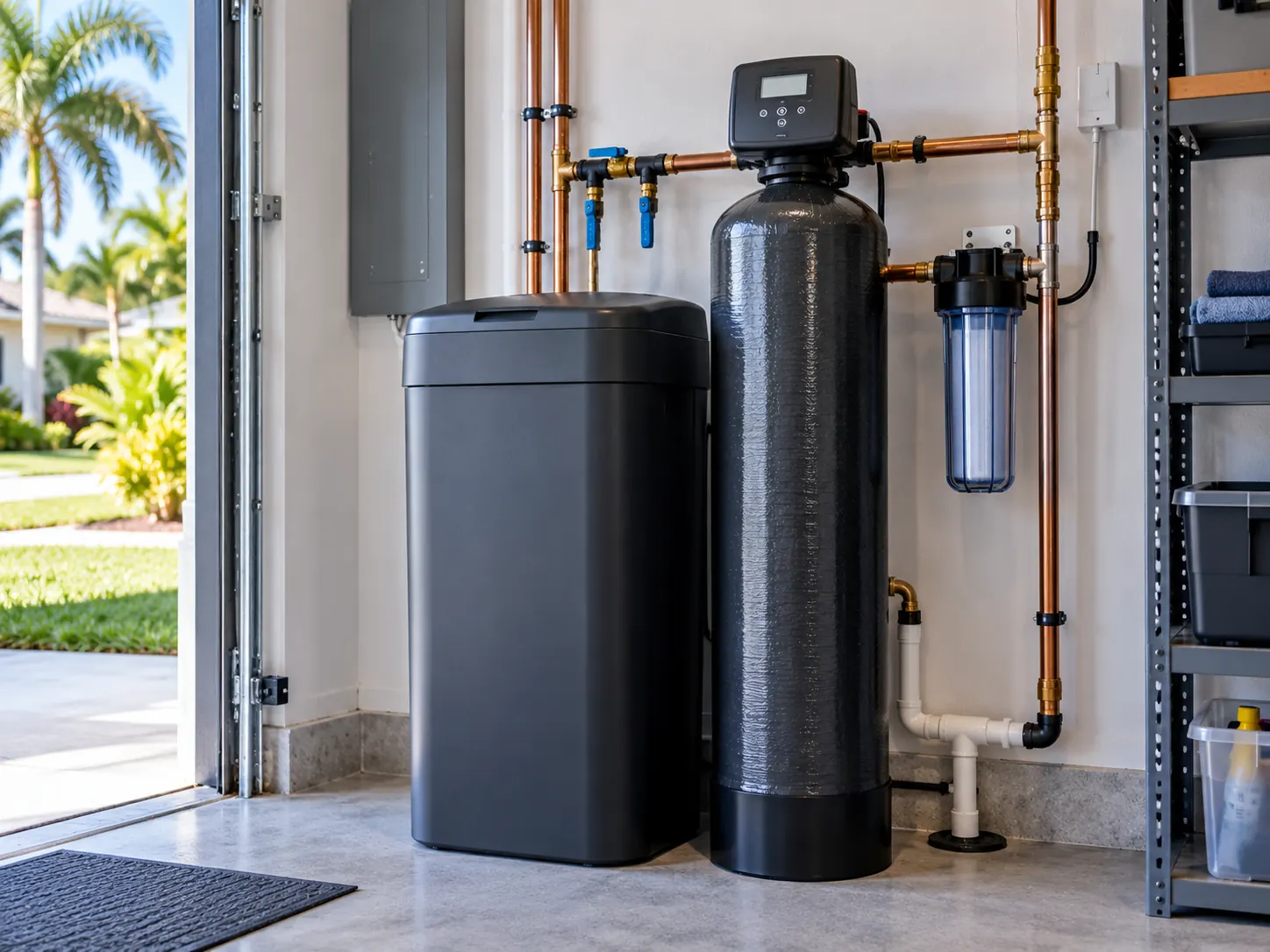
Pipe diameter, valve, drain flow, pressure and outdoor conditions can invalidate a paper calculation.
Common questions
How many grains do I need?
Calculate from tested hardness and use, then choose efficient usable capacity and flow.
Can a unit be too large?
Yes. Excessive size can add cost and create very long service intervals.
Can a unit be too small?
Yes. It may regenerate often or allow hardness through at high flow.
Sources matched to this guide
EPA WaterSense softener guidance
Sources support the specific factual statements above. Equipment claims still depend on the exact certified model and local conditions.