
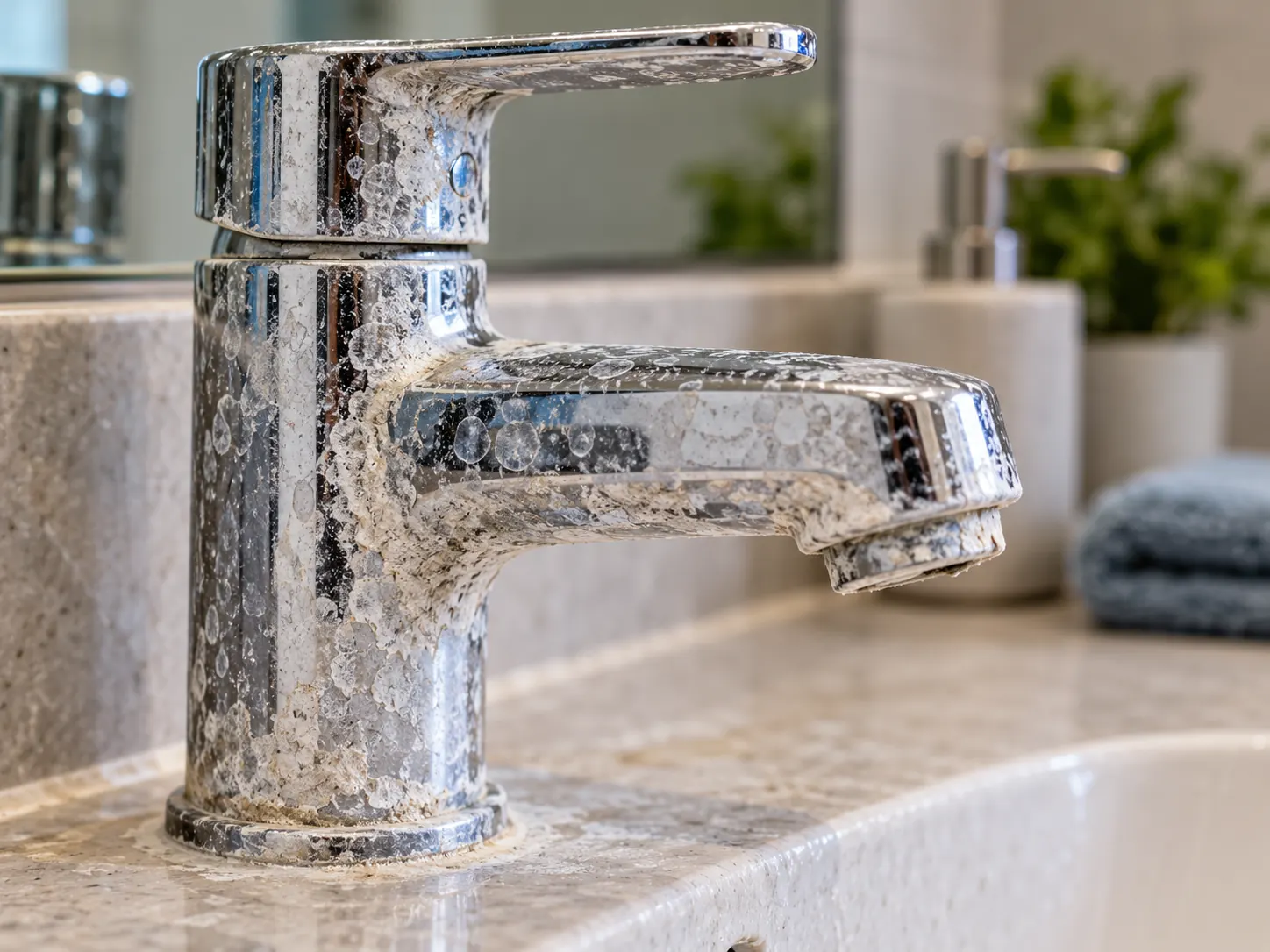
White crust on fixtures
Evaporation leaves minerals behind, so faucet aerators and spray openings often reveal scale. Cleaning confirms appearance, not hardness concentration.
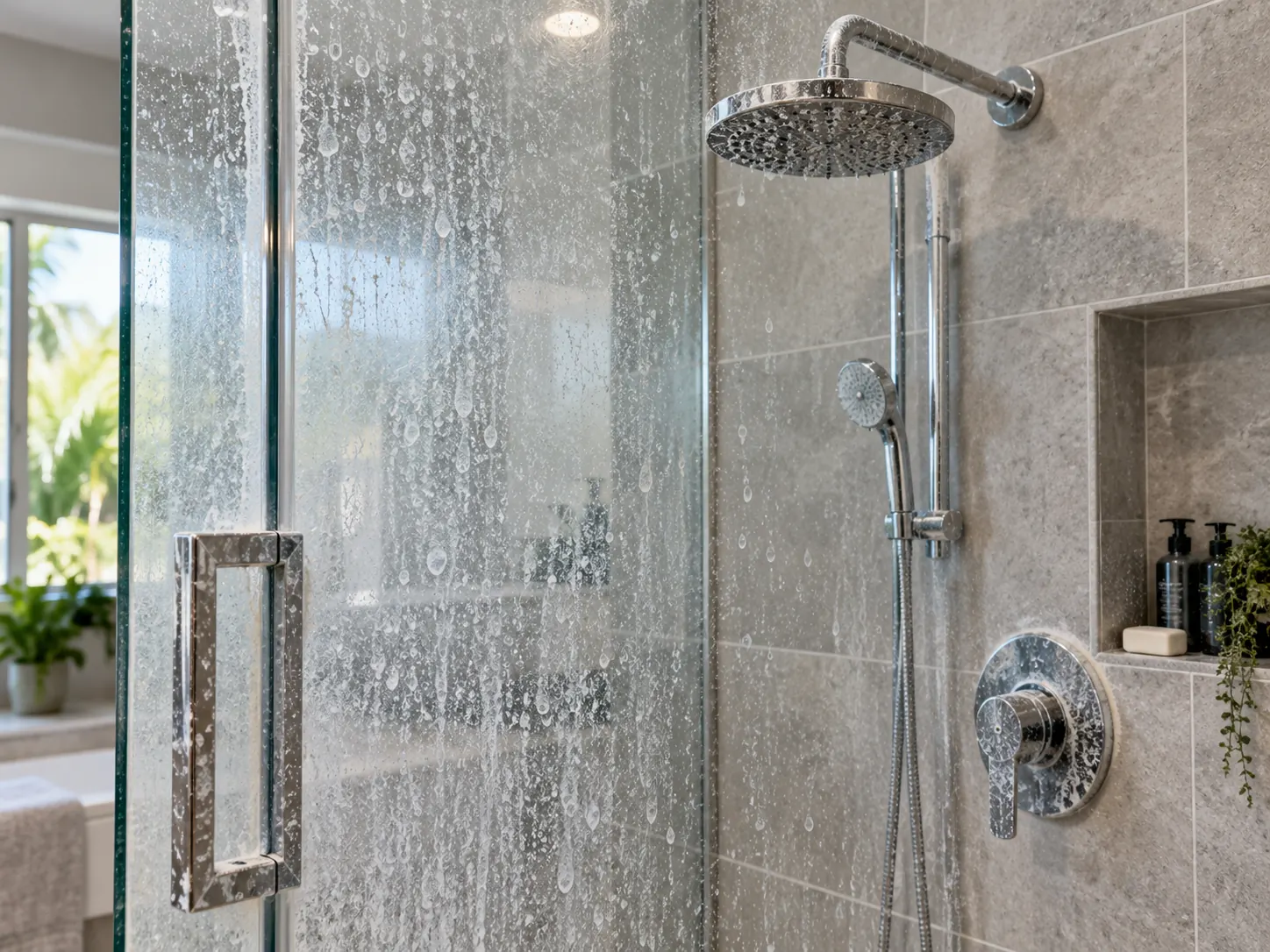
Shower glass spotting
Droplets can leave mineral marks as they dry. Soap film and cleaning products can look similar, so pair observation with a hardness test.
Cloudy glassware
Mineral film can create cloudiness, while permanent etching has different causes and may not reverse with softening. Check dishwasher settings and detergent as well.
Soap and skin feel
Hardness can interfere with lather and leave soap residue. Personal skin or hair experiences are subjective and should not be turned into medical claims.
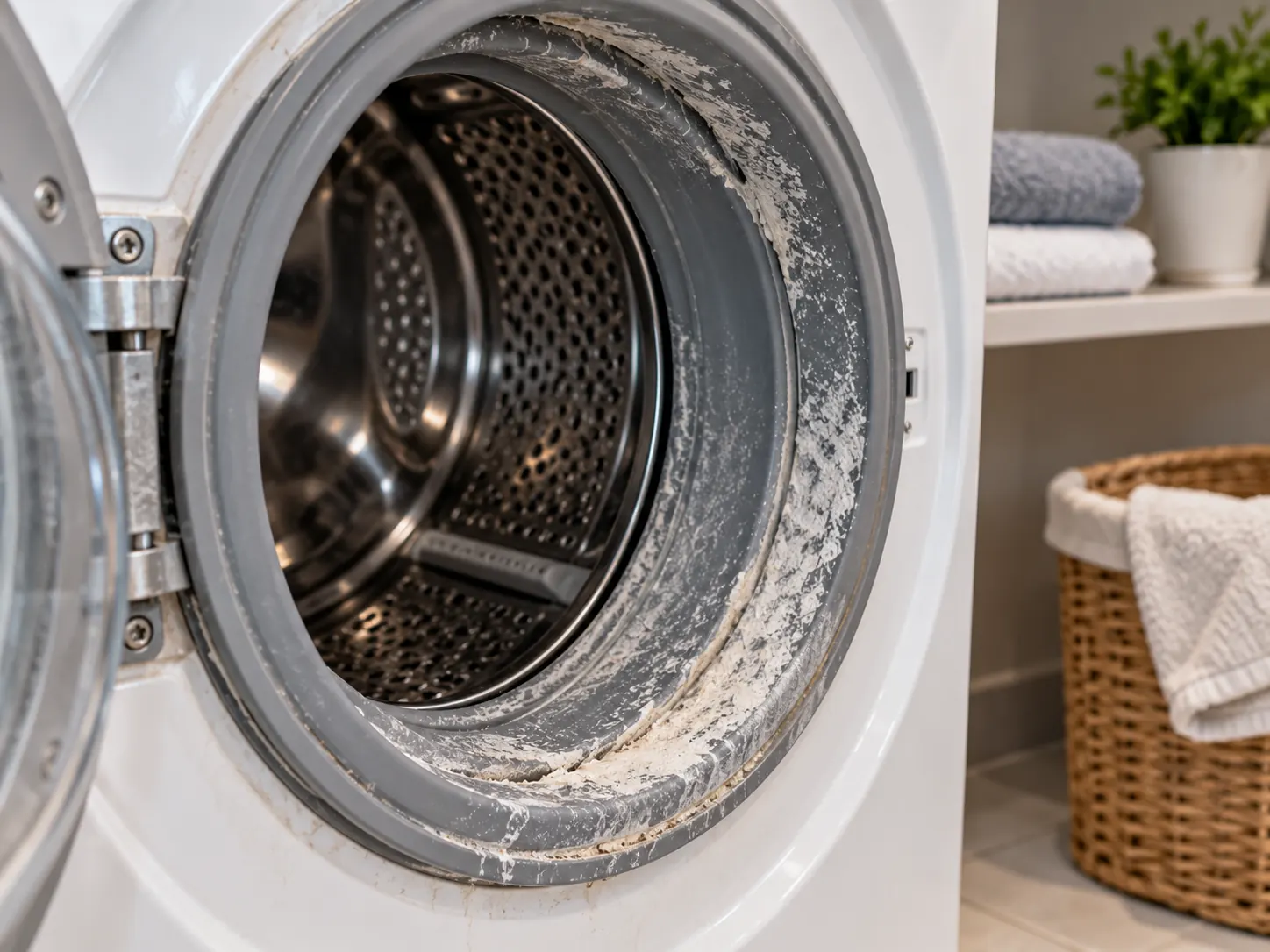
Appliance scale
Heat encourages mineral deposition. Water-heater elements and small passages may lose efficiency or flow, but equipment age and maintenance also matter.
What is not a hardness sign
Orange staining, rotten-egg odor and visible sediment point toward other possible categories. A softener may not be the correct or complete response.
Confirming the pattern
Test hardness at an untreated representative tap, record the units and compare observations before and after any existing equipment.
Common questions
Can I diagnose hardness from scale?
Scale makes hardness plausible, but only a test gives a usable concentration.
Will a softener remove old scale?
It prevents new hardness loading; existing deposits need cleaning and may loosen gradually.
Is cloudy water always hardness?
No. Air, particles and other conditions can also affect appearance.
Sources matched to this guide
EPA WaterSense softener guidance
Sources support the specific factual statements above. Equipment claims still depend on the exact certified model and local conditions.