Is North Port water hard?
North Port homes can experience hard water, but there is no responsible single hardness number for every address. Municipal water may reflect several sources and operating conditions, while private wells are property-specific. Test hardness at the tap before selecting or programming a softener.
What hardness means
Hardness mainly describes dissolved calcium and magnesium. It can create scale as water evaporates or heats and can change soap behavior. Hard water is generally not treated as a health hazard; it is mainly a household maintenance and preference issue.
Units and conversion
Hardness may be reported as mg/L as calcium carbonate, ppm or grains per gallon. In ordinary dilute-water reporting, ppm and mg/L are numerically comparable. One grain per gallon is approximately 17.1 mg/L. Conversion helps equipment settings but cannot repair an unrepresentative sample.
Categories need context
Published labels such as soft, moderately hard, hard and very hard are interpretive ranges, not North Port measurements. Different agencies and industries may group boundaries differently. Use categories to explain a measured result—not to assign a result without testing.
Why online numbers disagree
Third-party databases may use different dates, sampling points, source systems or utility averages. North Port also has municipal and private-well households. A number from a neighboring system, old report or generated infographic should not be applied to every property.
What it looks like
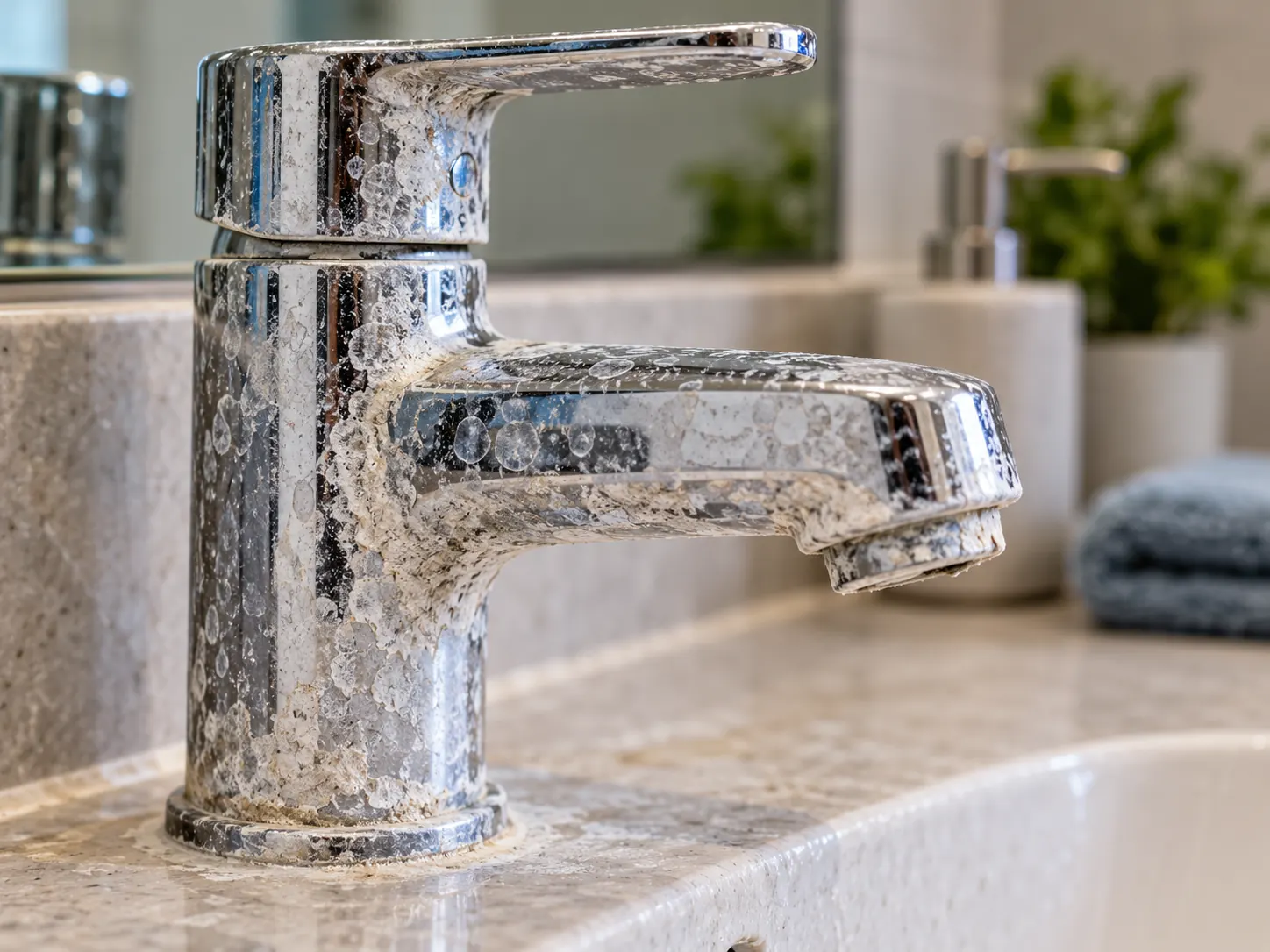
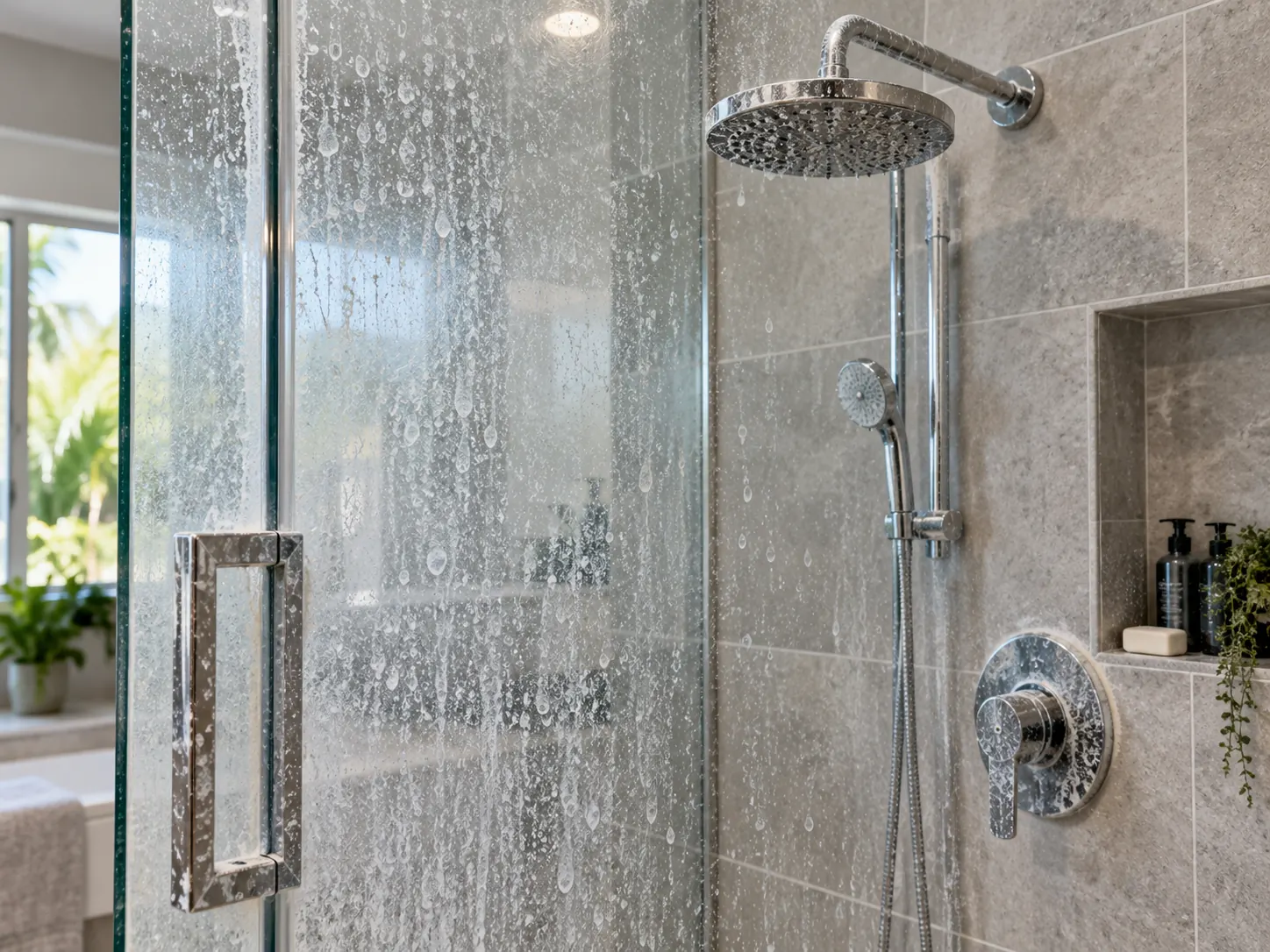
Faucet scale, shower spots, cloudy glassware and weak lather are familiar clues. Scale can accumulate around heating elements and small openings. These observations cannot identify an exact hardness level or rule out other causes.
Safety and softening
Hardness itself is generally an aesthetic or operational characteristic. Softening is not disinfection and does not make unknown well water safe. If safety is the question, use appropriate certified laboratory testing and health guidance.
When a softener may help
A softener may make sense when measured hardness aligns with household goals for scale or soap performance. Capacity, flow, efficiency, sodium considerations and wastewater arrangements still matter.
How to test the property
Sample a representative cold-water tap before existing treatment when possible. Record the unit, date, source and location. A field titration may guide softener sizing; a certified laboratory is appropriate when broader water quality or health concerns are involved.
Common questions
Can I use a ZIP-code hardness number?
Use it only as a rough lead. It cannot replace a current result at the property.
Is hard water unsafe to drink?
Hardness is generally treated as an aesthetic and operational characteristic, not a health-based violation.
Does a softener make water safe?
No. It reduces hardness; safety questions require appropriate testing and treatment.
Why did hardness change?
Source blending, seasonal operations, well conditions or treatment settings can change a result.
Sources matched to this guide
City of North Port Water Quality; EPA WaterSense softener guidance
Sources support the specific factual statements above. Equipment claims still depend on the exact certified model and local conditions.