
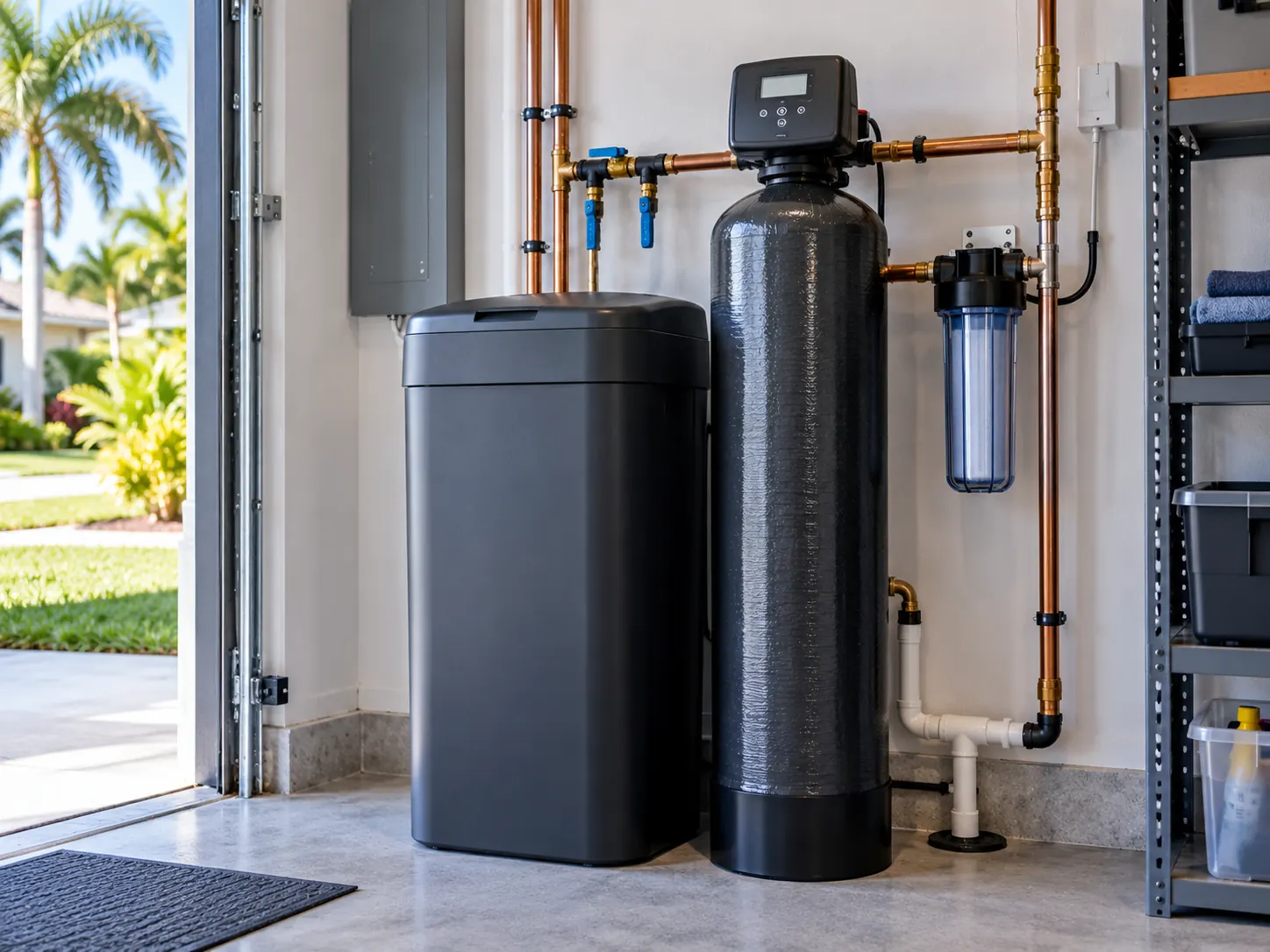
The essential difference
Ion exchange removes calcium and magnesium from the treated stream. Salt-free conditioning generally aims to change scale behavior while leaving hardness minerals present.
Measured outcome
A correctly operating softener produces a lower hardness test result. A conditioner generally does not, so a hardness strip is not the right way to judge its scale-conditioning claim.
Salt and water use
Ion exchange consumes salt and regeneration water. Demand-initiated controls and efficient settings reduce waste. Salt-free systems avoid brine but may need media replacement and pretreatment.
Where each fits
Choose ion exchange when actual soft water and hardness reduction are the goal. Consider conditioning only when its documented scale claim, water chemistry and expectations align.
Claims and certification
Ask for third-party certification to the exact function. NSF/ANSI 44 applies to cation-exchange softeners; scale-reduction technologies may use other standards or protocols.
Maintenance reality
Neither option is maintenance-free. Softening needs salt and valve care; conditioners need cartridge or media service and may be sensitive to water conditions.
Common questions
Does salt-free mean soft water?
Usually no. Hardness minerals remain even if scale behavior changes.
Which feels different in the shower?
Ion exchange changes hardness and soap behavior more directly.
Is a salt system wasteful?
It uses regeneration water and salt; efficient sizing and demand controls reduce use.
Sources matched to this guide
EPA WaterSense softener guidance; NSF residential treatment standards guide
Sources support the specific factual statements above. Equipment claims still depend on the exact certified model and local conditions.