
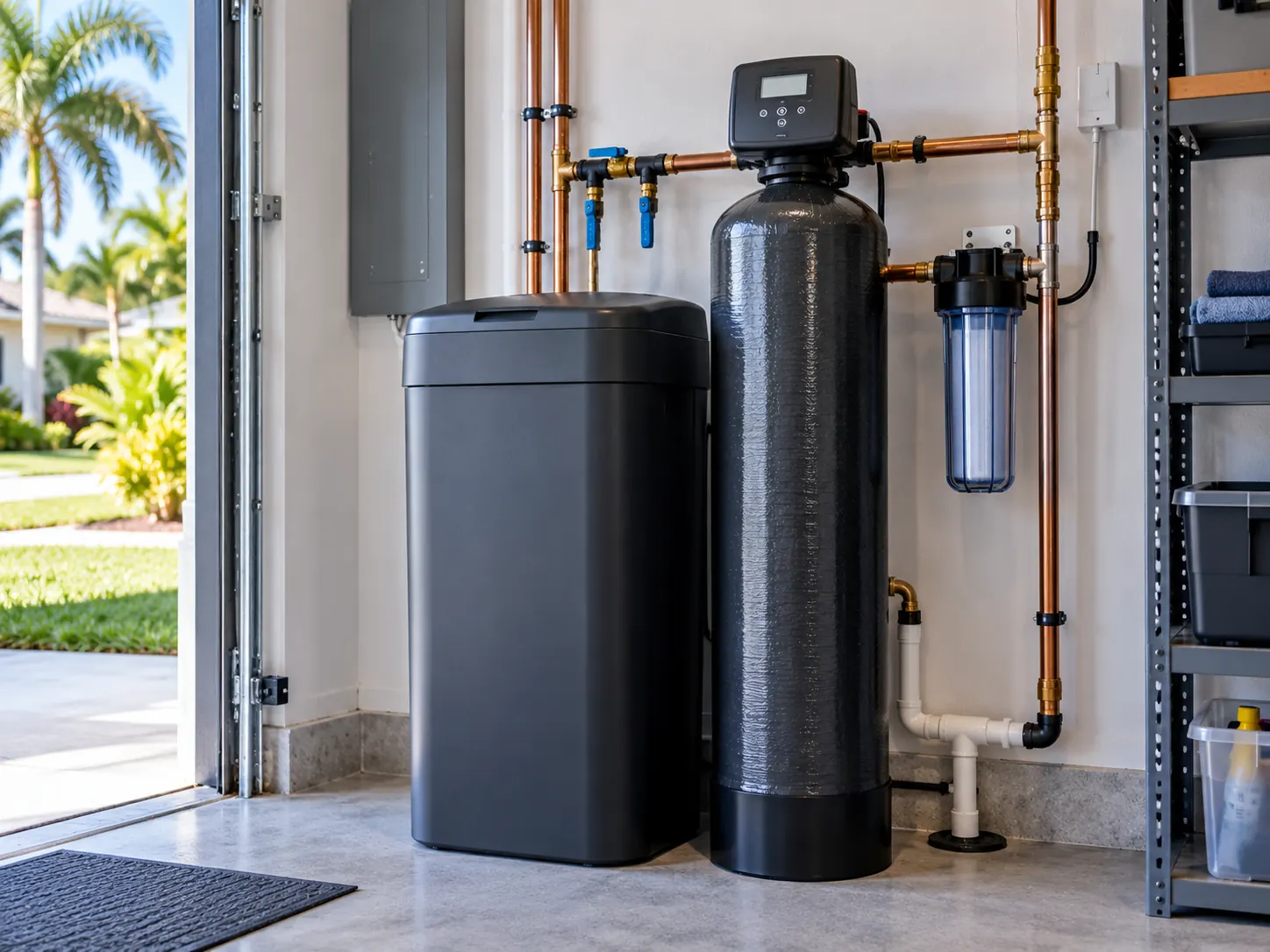
Service cycle
Hard water enters the mineral tank and passes through resin. Exchange sites hold calcium and magnesium while releasing sodium or potassium.
Capacity exhaustion
Each gallon consumes some resin capacity according to hardness. The controller estimates remaining capacity from programmed hardness and metered use.
Backwash
The valve reverses flow to loosen the resin bed and carry debris to drain. Flow must be adequate for the tank and resin.
Brine draw
Concentrated brine moves through the resin and displaces accumulated hardness ions. The brine and removed minerals go to drain.
Rinse and refill
Rinsing removes excess brine and settles the bed. The brine tank refills with a measured amount of water for the next cycle.
Efficiency choices
Capacity is not fixed independently of salt dose. Demand initiation, proportional brining where available and accurate programming reduce waste.
Limits
Ion exchange targets hardness and certain documented ions under defined conditions. It does not disinfect water or replace target-specific filtration.
Common questions
Why does the unit run at night?
Many controllers schedule regeneration when household demand is low.
Why is there water in the brine tank?
Some designs maintain a measured refill; excessive standing water can indicate a fault.
What happens during a power outage?
The bypassed plumbing still carries water, but the control clock or stored settings depend on the model.
Sources matched to this guide
EPA WaterSense softener guidance
Sources support the specific factual statements above. Equipment claims still depend on the exact certified model and local conditions.